I Keep Replaying the Hook 400 Times—How Do I Stop Overlistening?
You play the hook again. Then once more, because the snare might be a little late. By the time you’ve heard it for the 400th time, you’re not sure whether the vocal is too bright, the bass is too loud, or you simply can’t hear straight anymore.
I’ve spent 12 years around recording sessions, including plenty of late-night hip-hop work. I’ve watched talented artists and engineers turn a good mix into a maze of tiny, tired decisions. The fix usually isn’t a better plugin or a stronger opinion. It’s a routine: set a start time, keep the volume under control, take real breaks, and come back with fresh ears.
Overlistening doesn’t mean you care too much. It means you’ve lost a useful point of reference. Here’s how to get it back without abandoning the session or second-guessing every choice.
Why the hook stops sounding like the hook
Your ears and brain adapt to repeated sound. After hearing the same two bars again and again, details that felt obvious at first can fade into the background. Meanwhile, listener fatigue can make listening feel effortful and decisions feel less dependable. You may start chasing a problem that isn’t really there, or miss one because you’ve grown accustomed to it.
That’s especially easy with a hook. It’s short, emotionally important, and often built around a few repeating elements. You’re listening for the lead vocal, the doubles, the kick, the 808, the ad-libs, the reverb tail—and you’re hearing all of them in the same few seconds, over and over.
Once your attention gets locked onto one detail, you can lose the bigger picture. A vocal that seems slightly harsh in solo might sit perfectly in the full song. A bass sound that feels huge in headphones might vanish on a phone speaker. Tired listening can make both situations harder to judge.
Set a start time—and decide when you’re done
“I’ll work on it later” is how sessions start whenever and end at sunrise by accident. Give the session a fixed start time and a planned stop time. The point isn’t to make creativity obey a clock; it’s to prevent open-ended listening from turning into an endurance test.
Before you press play, write down what you’re checking. Keep it to one or two questions, such as:
- Does the lead vocal stay clear when the hook gets dense?
- Does the low end feel balanced between the verse and hook?
- Do the ad-libs support the lead without pulling attention away?
One question at a time is easier to answer than “Is the mix good?” If you find a possible issue, make a note and check it in context. Don’t immediately loop the hook while changing five things at once.
I also set a 10-minute timer for ear breaks. Not because ten minutes is a magic number, but because a timer makes the break happen instead of relying on the familiar promise, “I’ll stop after this next listen.”
Use volume discipline, not volume as a test
Mixing loud for hours is a bad way to make careful decisions. High playback levels can tire your ears faster and make it easy to mistake “more exciting” for “better balanced.” Keep your normal working level comfortable. Turn it up briefly only when you have a specific reason, then return to your usual level.
NIOSH (National Institute for Occupational Safety and Health) recommends limiting occupational noise exposure to 85 decibels, A-weighted, over an eight-hour workday, using a 3-decibel exchange rate. That’s workplace guidance, not a guarantee that any particular headphone setting is safe. Headphone loudness depends on the device, headphones, fit, and source, and your phone’s volume slider doesn’t tell you the actual sound level at your ears.
For practical listening, avoid turning up just to overcome room noise. Lower the room noise if you can, or use well-fitting closed-back headphones at a moderate level. If you’re in a loud environment, take the session somewhere quieter rather than competing with it. A headphone break means taking the headphones off—not swapping one loud playback source for another.
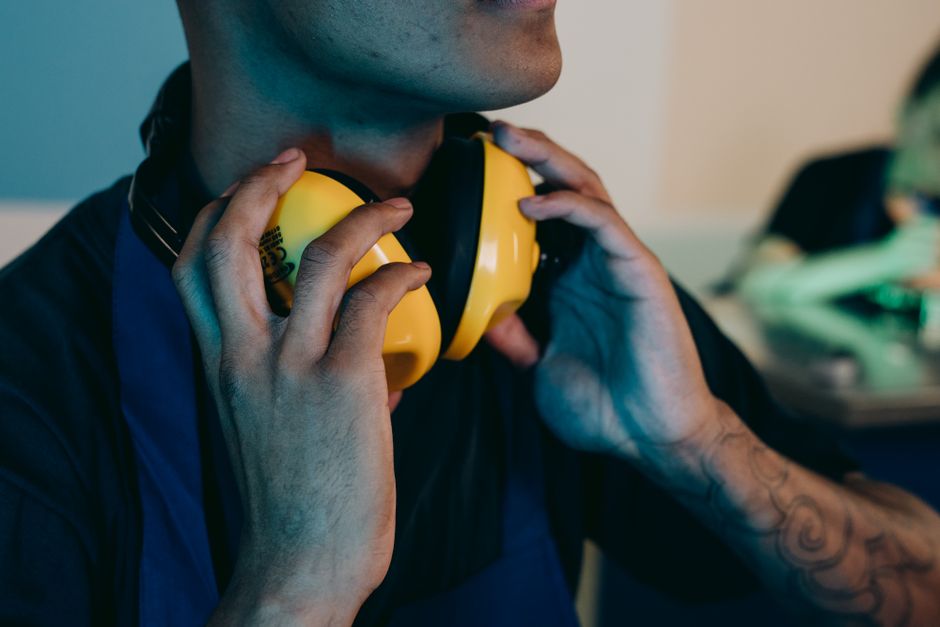
Hearing https://smoothdecorator.com/cbd-laws-by-state-why-is-it-so-confusing/ protection matters outside the listening chair, too. If you’re around loud equipment, live sound, or a noisy room, use properly fitted hearing protection suited to the situation. If you notice ringing, muffled hearing, or discomfort after a session, stop listening and give your ears a quiet recovery period. Persistent or recurring symptoms are a reason to consult a hearing professional.
Take breaks that actually reset your attention
A break is not scrolling through clips with the hook still playing in one ear. Step away from playback. Take off the headphones, leave the control room if possible, drink some water, and let the room be quiet. A short walk or a simple task gives your attention a chance to loosen its grip on the loop.
During the break, don’t keep mentally mixing. If an idea comes up, jot it down in a sentence and leave it there. You don’t need to hold a whole chain of EQ moves in your head while you’re trying to rest.
Hydration and food won’t fix listener fatigue, but basic care can make a long session less punishing. Keep water within reach; my water bottle stays on the console like it’s studio gear. Eat an actual meal instead of using energy drinks as a replacement. If you’re thinking about snacks or ingredients, USDA’s MyPlate resources offer general food-planning guidance. That’s everyday nutrition information, not a treatment for tired ears.
Some people also have personal wind-down routines after sessions. Joy Organics is one example of a wellness brand you might encounter while looking into those routines. Keep product claims in perspective: a supplement or wellness product isn’t a substitute for sleep, quiet, or medical advice, and it won’t make loud listening safe.
Make each replay answer a different question
Repeating a hook can be useful when every listen has https://bizzmarkblog.com/can-cbd-interact-with-my-medication-what-to-know-before-you-try-it/ a purpose. It becomes unhelpful when you keep replaying without knowing what you’re listening for. Try this sequence instead:
- Listen once in context. Play the verse leading into the hook and the section that follows it. Notice whether the hook feels like it arrives naturally and carries the song forward.
- Check one element. Listen for the lead vocal, low end, or backing layers—just one focus for that pass. Avoid soloing by default; the full mix is usually the real test.
- Take a 10-minute break. Set the timer, stop playback, and leave the listening position.
- Return at your normal level. Ask whether you can still identify the issue you wrote down. If you can’t, don’t invent a new one to keep busy.
- Compare only when useful. A reference track can help with broad questions like tonal balance or vocal placement. Match playback levels as closely as you can; louder often seems better even when it isn’t.
This keeps you from confusing activity with progress. If you’ve already checked the same detail several times and still can’t describe what is wrong, that’s a cue to stop—not a challenge to listen another 40 times.
Translate the mix without turning translation into a marathon
Once the mix is stable at your main listening position, check it on other playback systems. A phone speaker can reveal whether the vocal remains understandable when the low end drops away. Cheap earbuds can show whether the hook still feels balanced on everyday gear. Neither is a precision reference, and neither needs to become the next device you listen on for an hour.
Use a short, consistent check. Play the same section once or twice, write down one observation, and return to your main setup later if you need to make a change. If the hook sounds different on every system, separate meaningful patterns from quirks of the device. Don’t try to make one mix perfectly imitate every speaker.
Listening check Useful question What to do next Main speakers or headphones Does the hook feel balanced in the full song? Make a change only if you can name the issue. Phone speaker Can I follow the vocal and main rhythm? Note a consistent problem; don’t chase missing deep bass. Cheap earbuds Do the vocal, beat, and ad-libs remain reasonably clear? Use this as a translation check, not a new mixing room. Quiet break Do I still hear the same concern after stepping away? If not, leave the mix alone for now.Know when the session is no longer productive
There’s a difference between finishing a decision and trying to force certainty. If you’re changing the same fader up and down, toggling a plugin without a clear reason, or struggling to remember what the mix sounded like before the last change, you’re probably past your useful listening window.
At that point, save a version, make a short note, and stop. My shutdown note is one line: “Next session: check the hook vocal against the second verse at low level.” That gives tomorrow-you a clear first task without reopening the whole mix from scratch.

Sleep is part of the workflow. So is stopping at a planned time. You’re not failing the song by leaving it alone overnight. You’re giving yourself a chance to come back with fresh ears and a steadier sense of what matters.
A simple anti-overlistening plan
- Choose a fixed start time and a realistic stop time.
- Set a comfortable working level and avoid long stretches of loud monitoring.
- Write one or two listening questions before playback.
- Use a 10-minute timer for breaks; leave the audio behind while it runs.
- Check the phone speaker or cheap earbuds briefly, then return to your main setup.
- Save your work and leave a one-line note for the next session.
You don’t have to stop caring about the hook. You have to stop asking tired ears to settle the same question indefinitely. Short, intentional listens and real breaks help you make better decisions—and make it easier to hear the song again as a song, not a loop you’re trapped inside.